

18th Feb, 2025
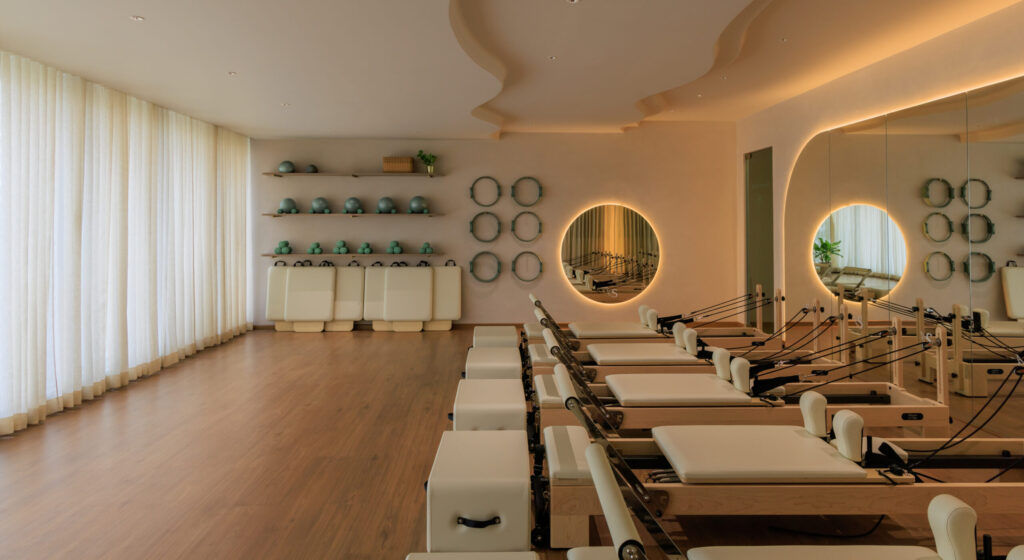
You’ve probably experienced this without consciously analysing it. You walk into an office for the first time, and before anyone speaks, before you read the company profile, before a presentation begins — you’ve already formed an impression. The space either feels solid and professional, or it feels unsettled in ways you can’t quite explain. That immediate reaction is not accidental; it is the result of interior design decisions working quietly in the background. In commercial environments, credibility is not created by a single statement feature or an expensive material. It is built through spatial planning, proportion, material discipline, lighting balance, acoustic comfort, and detailing consistency. While many businesses focus on visual impact, truly credible office design is rooted in how a space is structured and how effectively it performs on a daily basis.
The foundation of a credible office begins with layout planning. Zoning must be intentional and easy to understand. Public areas such as reception and waiting lounges should transition seamlessly into semi-private meeting rooms and then into more private work zones. Circulation paths need to feel intuitive, allowing visitors and employees to move naturally without hesitation. When someone enters a workspace and instantly understands where to go, the organization subconsciously appears structured and competent. On the other hand, confusing corridors, awkwardly placed cabins, or workstations spilling into walkways create friction. Even if the materials are luxurious, poor spatial logic quietly reduces trust. Credibility, at its core, begins with clarity.
Proportion is another powerful yet often overlooked interior design tool. Every element within an office — from reception desks to boardroom tables — must relate harmoniously to the volume of the space. An oversized desk in a compact lobby can feel performative rather than authoritative. A cramped conference room can undermine the importance of strategic discussions. Ceiling heights, wall planes, and furniture scale must align to create visual balance. When proportions are correct, spaces feel calm and composed. When they are not, the imbalance is felt immediately, even if it cannot be verbally identified.
Material selection shapes perception in subtle but lasting ways. Credible commercial interiors typically rely on a restrained palette rather than an excessive mix of finishes. Repetition creates cohesion. A consistent veneer tone across cabins and meeting rooms, coordinated metal finishes on hardware and lighting fixtures, and deliberate flooring transitions contribute to a unified environment. Random changes in laminates, colours, or textures from one department to another often make the office feel assembled over time rather than intentionally designed. Texture layering also requires sensitivity. Balancing matte and semi-gloss finishes, integrating natural materials with engineered surfaces, and ensuring visual harmony between vertical and horizontal planes prevent sensory overload. A controlled material language communicates confidence far more effectively than dramatic contrasts.
Lighting design has a direct impact on how professional and dependable an office feels. Layered lighting — combining ambient illumination, focused task lighting, and subtle accent highlights — creates depth while maintaining comfort. Harsh glare, inconsistent colour temperatures, or overly decorative fixtures can introduce visual fatigue and distraction. In work zones, evenly distributed light supports concentration and reduces strain. In boardrooms, glare-free illumination ensures screens remain clear and conversations uninterrupted. In reception areas, soft yet defined lighting draws attention without overpowering the space. When lighting is technically resolved and visually balanced, the office feels thoughtfully curated rather than theatrically staged.
Ceiling design contributes significantly to overall coherence. Whether opting for a minimal false ceiling or an exposed industrial look, alignment is essential. Services such as air-conditioning ducts, sprinklers, and lighting tracks should follow a grid or intentional pattern. Randomly placed fixtures or uneven bulkheads disrupt visual order. Clean ceiling lines and coordinated placements reinforce discipline in design, subtly strengthening credibility.
Furniture planning must prioritize ergonomics and alignment over trend. Workstations should allow sufficient clearance for circulation and comfortable movement. Meeting tables need to support equal visual hierarchy among participants, ensuring no seat feels secondary. Chairs must be selected not only for aesthetics but for long-term comfort and posture support. Integrated storage solutions prevent surfaces from becoming cluttered. When furniture placement aligns with architectural grids and maintains consistent spacing, the workspace feels structured and calm. Misalignment, mismatched finishes, or overcrowded layouts introduce visual noise that diminishes clarity.
Acoustic comfort is equally critical in commercial interiors. Hard surfaces without acoustic mitigation create echo and distraction, especially in open-plan offices. Integrating soft furnishings, carpets, acoustic panels, ceiling baffles, or upholstered partitions helps manage sound levels. Meeting rooms must ensure speech privacy, while collaborative zones should allow interaction without disturbing focused work areas. When acoustics are thoughtfully addressed, employees experience ease and reduced stress. Over time, this comfort reinforces the perception of a well-managed environment.
Consistency across departments strengthens spatial identity. This does not imply uniformity but rather a cohesive design language. Door frames, skirting profiles, hardware finishes, and glass partition details should feel related. Subtle repetition of materials and forms builds continuity. When an office appears to have been designed as a single vision rather than in isolated phases, it signals foresight. Credibility often lies in this sense of unity.
Brand integration should be spatial rather than purely graphic. Instead of relying solely on oversized logos or bold wall graphics, the office can reflect company values through layout and behaviour. Transparent glass partitions can communicate openness. Dedicated quiet zones can express a culture of focus. Collaborative hubs positioned centrally can highlight teamwork. Strategic use of brand colours in breakout areas or soft furnishings can add identity without overwhelming work zones. When brand expression aligns with functionality, it feels authentic rather than performative.
Flexibility ensures longevity. Businesses evolve, teams expand, and operational needs shift. Designing modular furniture systems, movable partitions, and adaptable meeting rooms allows the workspace to grow without losing coherence. Allocating convertible zones prevents disruptive renovations later. Credible offices anticipate change rather than reacting to it. Storage planning also plays a role in long-term success. Built-in cabinetry, concealed filing systems, and organized service areas prevent clutter accumulation. Without adequate storage, even the most thoughtfully designed office can quickly lose visual clarity.
Durability and maintenance considerations further influence perception over time. High-traffic flooring should resist wear. Laminates and veneers should withstand regular use. Easily cleanable surfaces reduce visual fatigue. Materials that age gracefully maintain their integrity, while those that chip or fade prematurely undermine the space’s authority. Designing with maintenance in mind reflects maturity and foresight.
Reception areas anchor first impressions and deserve special focus. Balanced seating layouts, proportionate desks, refined backdrops, and controlled lighting create authority without excess. Boardrooms and leadership cabins can subtly differentiate themselves through slightly richer materials, improved acoustic insulation, or refined detailing. Hierarchy should feel natural, not exaggerated.
Ultimately, credible office interiors are defined by alignment — between architecture, furniture, lighting, materials, and purpose. Nothing feels random or overly dramatic. Each element supports both function and aesthetic coherence. When interior design is approached strategically rather than decoratively, offices feel grounded, efficient, and dependable. Credibility is rarely loud; it is composed, consistent, and intentional. And when every design decision reinforces clarity and performance, the workspace feels assured from the moment someone walks in — and continues to feel that way long after the first impression.
Is a bigger budget necessary to create a credible office interior?
No. Credibility comes from thoughtful planning and clear intent, not from expensive or dramatic features. Even modest budgets can create strong impact when design decisions are purposeful and cohesive.
Why do some well-designed offices still feel “off”?
Often, these spaces focus heavily on visual impact aligning the design to actual workflows. When functionality, circulation, or employee comfort is compromised, the space may look impressive but feel unsettled.
How important is layout in building office credibility?
Layout is foundational. Clear navigation, logical zoning, and intuitive movement patterns subconsciously signal organization and competence, which directly contribute to trust.
Why do some offices lose credibility over time?
Credibility erodes when growth isn’t planned, layouts can’t adapt, maintenance is overlooked, or temporary decisions become permanent. Poor long-term planning gradually affects perception.
How does clutter impact credibility?
Visual and spatial clutter create mental noise. Clean circulation paths, organized storage, and controlled material palettes help maintain clarity and confidence in a workspace.